























Google Play outside billing is finally real, though it is not the free-for-all the headline suggests. Starting June 30, developers can charge users through their own payment systems or send them to the web, instead of being forced through Google Play’s billing. The change hits the US, UK, and the EEA first. It also did not happen by choice.
What is actually changing
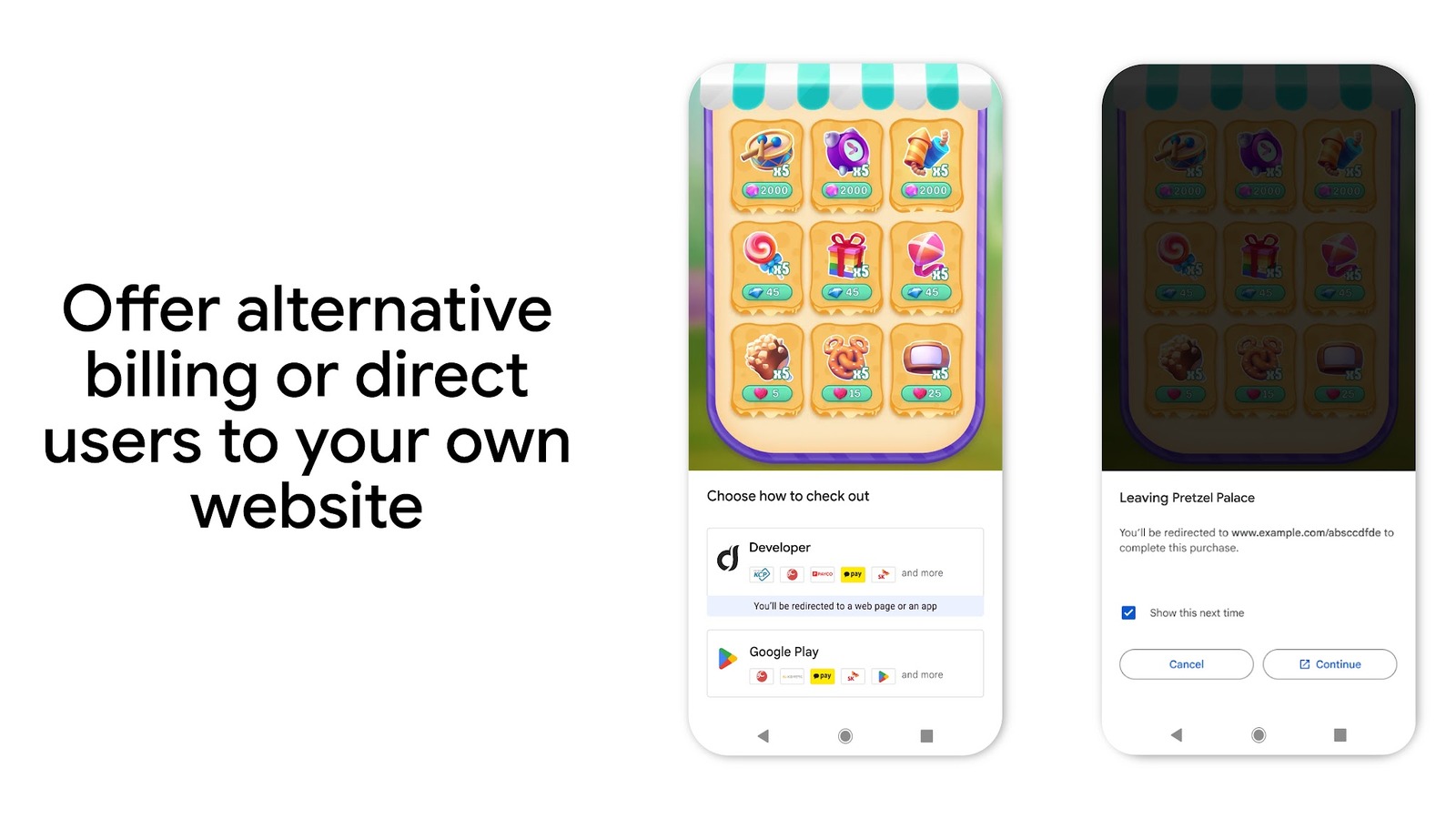
For years, Google required apps that sell digital goods to use Google Play Billing, and it took a cut of every sale. Now developers get options. They can build an alternative payment system inside the app, or link users out to their own website to check out. They can even design their own payment choice screen, within Google’s guidelines. In short, Google Play Billing becomes one option rather than the only one.
The fees are lower, not gone
Here is the part that matters. Google split its old all-in commission into two pieces. The first is a service fee on every transaction. The second is a separate 5% billing fee, which applies only when Google Play Billing handles the payment. So outside billing lets a developer skip that 5%, but not the service fee. That service fee starts at 10% on a developer’s first $1 million in yearly earnings, and 10% also covers every auto-renewing subscription. Above $1 million, one-time purchases run 20% on new installs and 25% on existing ones. Lower 15% and 20% rates arrive through Google’s Apps and Games programs on September 30.
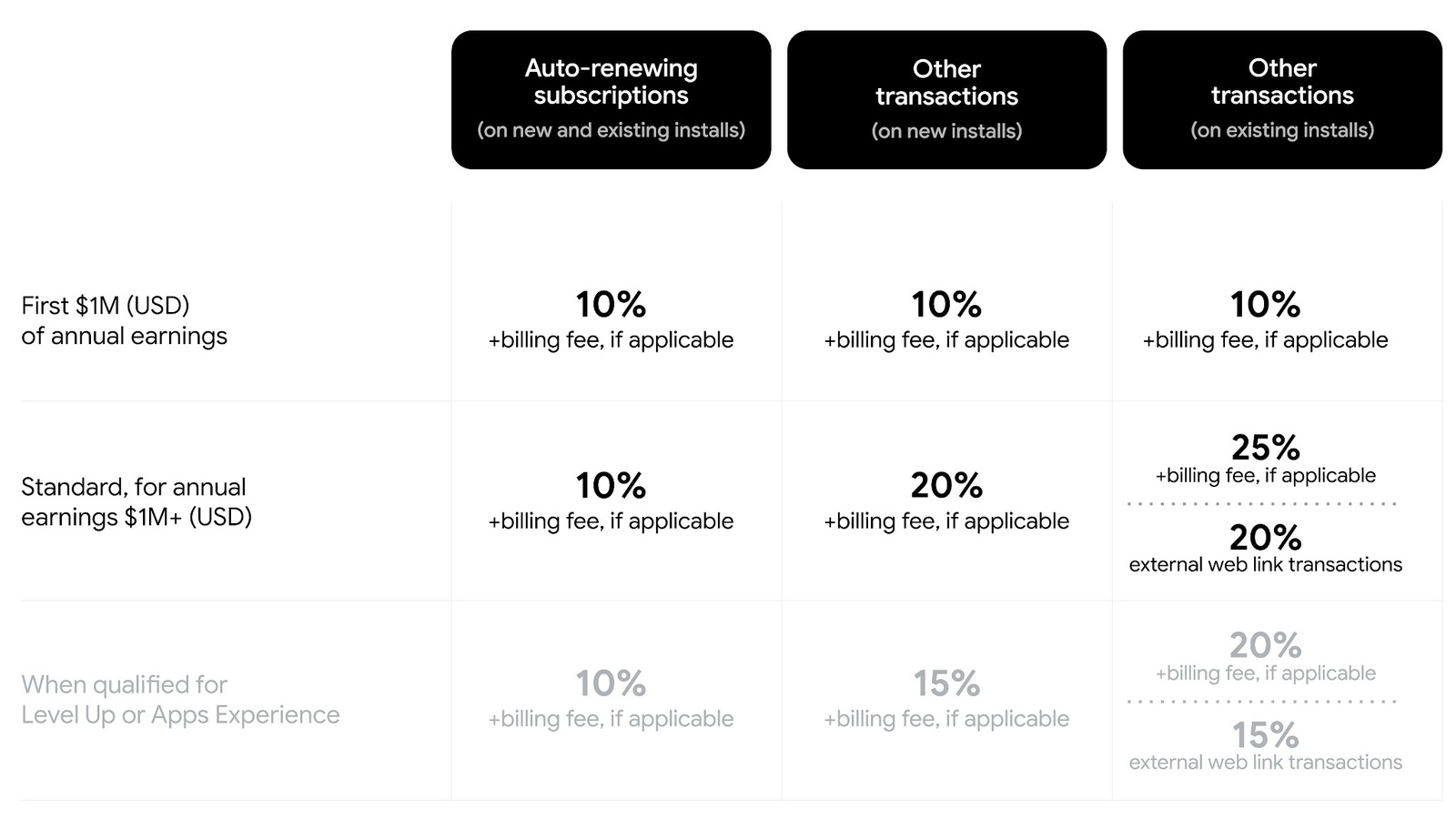
Read that carefully, though. The realistic saving against the old 30% is closer to five points on the payment side, not thirty. Moreover, developers who leave Google’s billing now handle their own processing, fraud, and chargebacks. Google still says most service fees in these regions will land at 20% or less.
Why Google is doing this
This is not generosity. It is the cost of losing in court. A 2023 jury found that Google ran an illegal monopoly over Android app distribution and billing. Judge James Donato then ordered the company to open up in 2024. The Ninth Circuit upheld that order, and the Supreme Court declined to step in last October. Google and Epic Games then struck a settlement to shape the rollout. Notably, that settlement still awaited final court approval in late June, even as Google flipped the switch. The move also echoes a wider squeeze on app-store gatekeepers. We saw it when Apple’s iOS app stores opened up in Brazil, and again when Fortnite forced its way back onto app stores.
The catches worth watching
A few asterisks remain. According to reports, Google can still charge its service fee on web purchases completed within about 24 hours of an in-app link tap. If so, linking out may not fully escape its cut. Google also still controls the design and wording of the payment choice screen. The rollout is gradual, too. Australia follows in September, Japan and South Korea in December, and the rest of the world only by September 2027. Epic chief Tim Sweeney cheered the deal with a public “THANKS GOOGLE.” Yet reports say the settlement bars him from publicly criticizing Google Play’s fees until 2032. That context is worth holding alongside the praise.
Add it up, and this is a real but partial opening. Developers genuinely gain payment choice and lower headline rates. Still, Google kept a fee on nearly every sale, and it kept control of the checkout screen. The ceiling came down, yet the floor barely moved.